Kenya is cautiously optimistic about declaring itself Ebola free by mid November after a sudden outbreak sparked widespread alarm. The crisis began when a traveler arriving from the Democratic Republic of Congo introduced the virus to Nairobi, leading to nine confirmed cases and two deaths. While Health Cabinet Secretary Aden Duale has begun releasing quarantined individuals in waves, the emergency has pulled back the curtain on a systemic failure in how the government communicates life saving information to its most vulnerable citizens.
Rob Myers, CEO of DOOR International, warns that Deaf communities are frequently the last to receive critical updates during public health disasters. He notes that most official warnings rely heavily on written text, which creates a massive hurdle since many Deaf individuals struggle with literacy in spoken languages and instead rely on sign language. This gap leaves thousands of people isolated from urgent directives regarding symptoms and safety protocols during an active contagion.
Beyond formal announcements, there is the issue of incidental information, which consists of the small pieces of medical knowledge people absorb through daily conversation or overheard chatter. Because Deaf people are excluded from these casual exchanges, they often enter a crisis without the baseline understanding needed to navigate complex medical terminology or government mandates. Myers recalls a harrowing instance from the pandemic where a Deaf man was beaten by police for violating a lockdown he simply did not know existed.
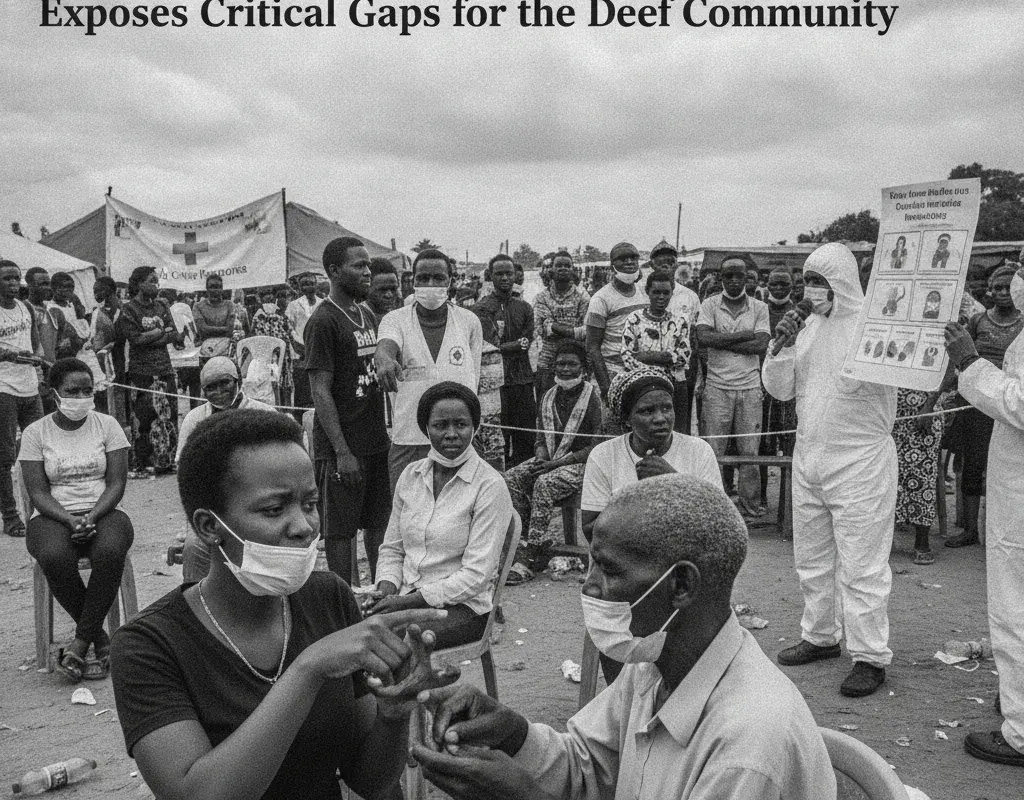
To combat this invisibility, specialized outreach workers and church planters are venturing into remote areas to provide tailored health education in sign language. By explaining exactly how Ebola spreads through bodily fluids and identifying key symptoms, these advocates hope to prevent further tragedies. However, they argue that until accessibility becomes a cornerstone of national health strategy rather than an afterthought, the Deaf community will continue to face disproportionate risks during every global health emergency.