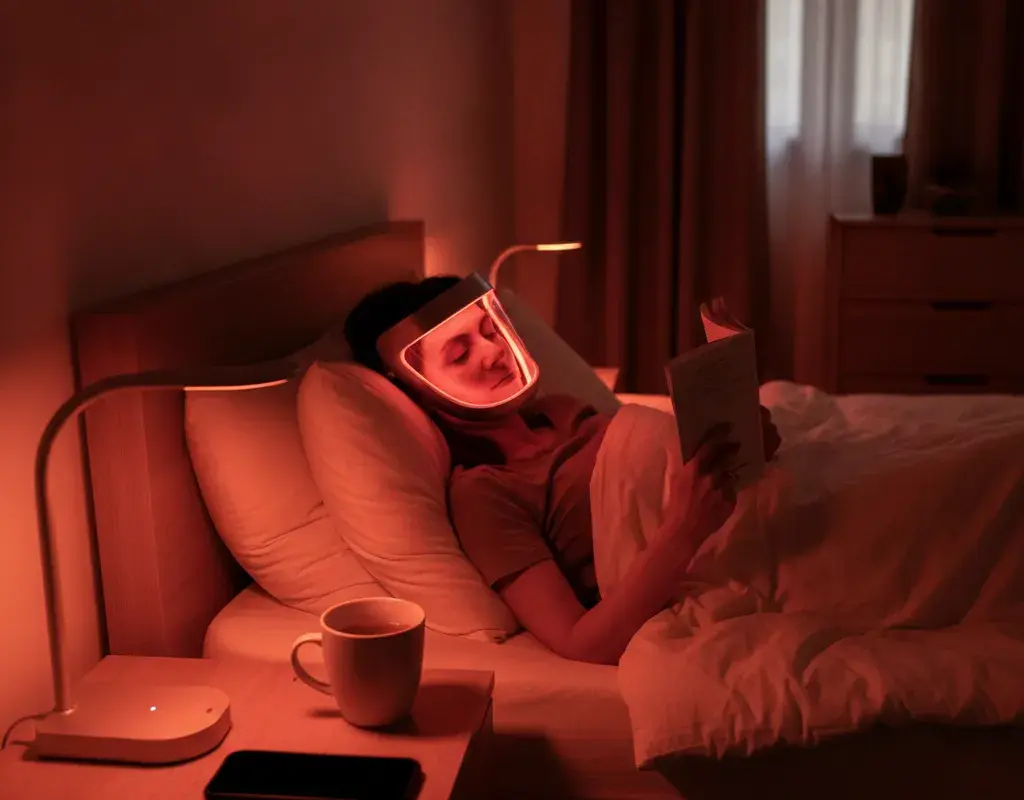
For millions of people, the ritual of winding down now involves a backlit screen, casting a sharp blue glow across the face just moments before closing the eyes. However, a growing wellness trend suggests that swapping this harsh illumination for red light might be the secret to a deeper slumber. From high tech facial masks to specialized bedside lamps, red light therapy has moved beyond skin care and muscle recovery to target our internal clocks, promising to tell the brain that it is finally time to shut down.
The science behind the shift lies in how our brains perceive different wavelengths of light. According to sleep experts, including longevity doctor Greg Jones, light acts as a biological signal that sets our circadian rhythm. While the blue light emitted by smartphones tricks the brain into thinking it is daytime and suppresses melatonin, red light has far less impact on those sensitive retinal cells. By switching to warmer tones in the evening, users can keep their environment illuminated without accidentally triggering a wide awake response from their nervous system.
Despite the buzz, specialists warn that red light is more of a supportive tool than a miracle cure for chronic insomnia. Dr. Daniella Marchetti notes that while recent studies suggest red light can improve overall sleep quality—making you feel more rested upon waking—it doesn’t necessarily increase the total number of hours spent asleep or prevent mid night awakenings. It functions less like a magic switch and more like an environmental adjustment that removes obstacles to natural sleep.
For those looking to experiment with this approach without spending a fortune on medical grade equipment, simple changes can make a difference. Experts suggest using red bulbs in bedside lamps or installing red night lights in hallways and bathrooms to avoid jarring wakes during late night trips. For those seeking specific therapeutic benefits, searching for devices with wavelengths between 600 and 800 nanometers is key, ensuring the light falls within the range known to support better rest throughout the night.