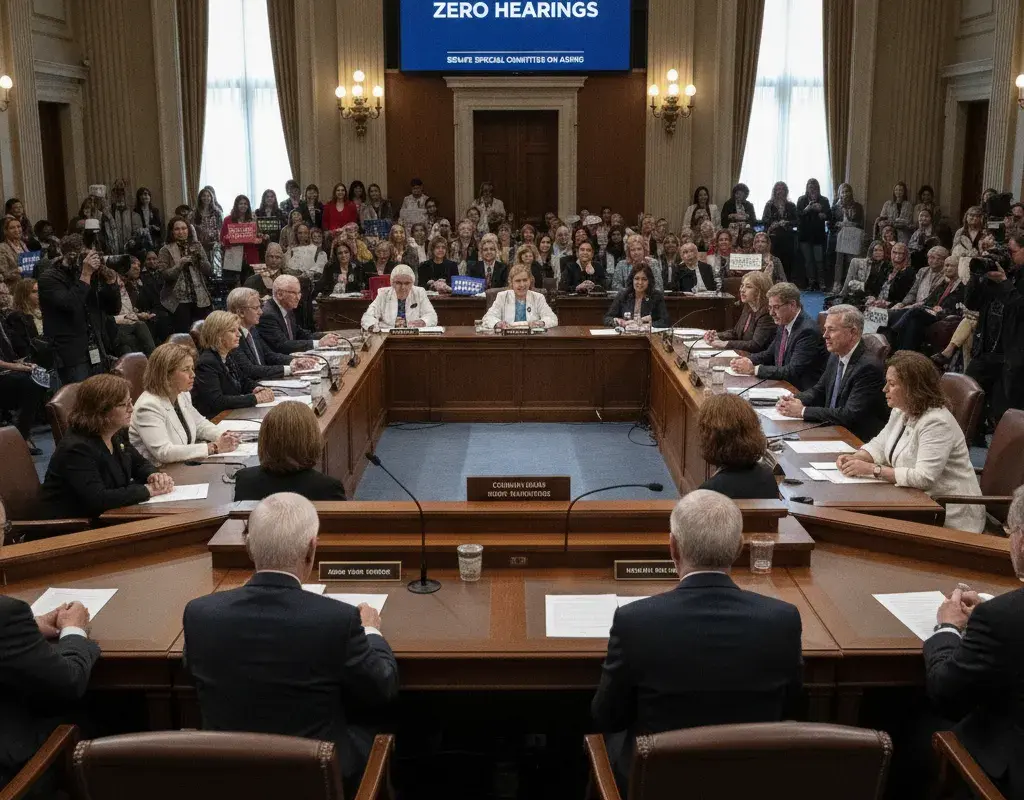
For too long, the physiological and psychological shifts of menopause have been treated as private struggles rather than public health priorities. That narrative shifted significantly on September 16 when the Senate Special Committee on Aging convened the first ever congressional hearing dedicated to the topic. Titled Half the Country, Zero Hearings, the session saw Republicans and Democrats unite under the leadership of Chairman Rick Scott and Ranking Member Kirsten Gillibrand to confront a systemic lack of research, inadequate provider training, and widespread gaps in patient access to care.
The urgency of this legislative push is underscored by staggering demographics. With roughly 1.3 million American women entering menopause annually and a population of women aged 50 and older expected to hit 80 million by 2050, experts argue that midlife health is one of the most pressing challenges of our time. Dr. Jean Wactawski-Wende emphasized during her testimony that this period is not just about managing hot flashes or sleep disruptions, but serves as a critical window for monitoring cardiovascular, bone, and cognitive health that impacts a woman’s wellbeing for decades.
Legislators are responding with several ambitious proposals designed to move menopause care from isolated clinical visits to a comprehensive public health framework. The Advancing Menopause Care and Mid-Life Women’s Health Act seeks $275 million over five years to fund National Institutes of Health grants, launch national education campaigns, and establish Centers of Excellence. By focusing on data collection and professional training, proponents hope to ensure that whether a woman is in a rural town or a major city, she receives evidence-based care from an informed provider.
Beyond general healthcare improvements, Congress is targeting specific vulnerabilities within different populations. New bills aim to improve research specifically for female veterans through the Department of Defense and mandate that medical schools integrate menopause training into their core curricula so future doctors aren’t flying blind. There is even movement toward labor protections via the Menopausal Workers’ Fairness Act, which would allow employees to seek reasonable workplace accommodations for symptoms that interfere with their daily productivity. Together, these efforts signal a fundamental shift in how Washington views aging women—not as a demographic to be overlooked, but as a vital segment of the population requiring targeted federal investment.